
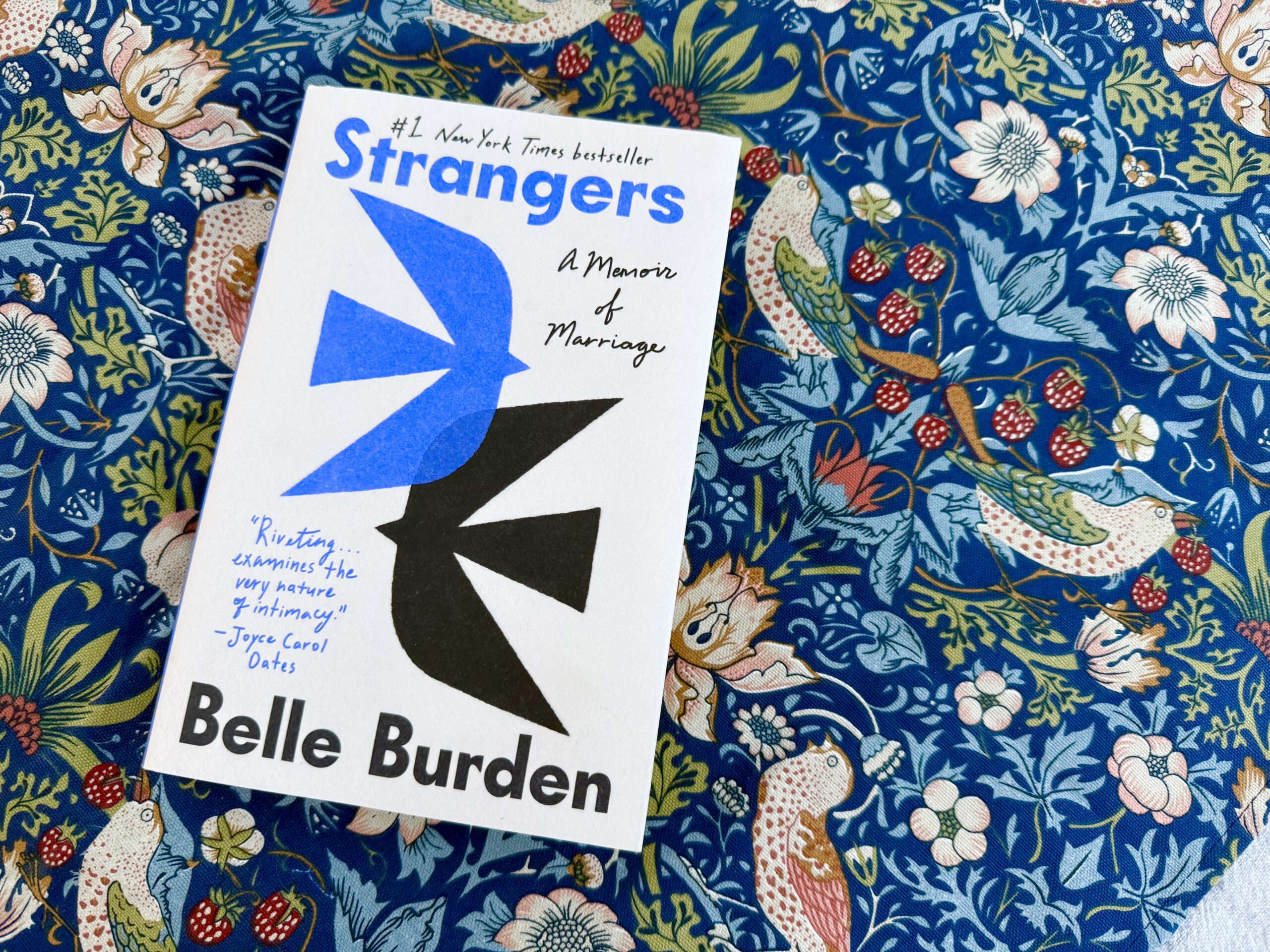
Esteemed readers of bookclique, it is with great satisfaction that I present to you the perfect book club book[1]: Belle Burden’s wildly-popular-for-good-reason, Strangers: A Memoir of Marriage. You may already know the outline: wealthy, Harvard-educated lawyer from a dynastic socialite family of exceptional privilege is shocked when her mild-mannered husband suddenly leaves her and their children with no warning, abandoning what Burden had experienced as a loving marriage. Bereft[2] in their Martha’s Vineyard summer home in the early weeks of the pandemic, Burden must confront her own romantic and economic naiveté. Yes, Strangers is a warning that you can never really know another person; it’s a wake-up call for women in traditional marriages who have left the “money stuff”[3] up to the man; it’s a challenge to the expectation that scorned wives will stay quiet so as not to air dirty laundry; but finally, it is the story of Burden finding her voice, not only as an independent woman but also as a writer.
With elements of a thriller (Burden is shocked by her husband’s affair, his decision to begin a new life, his financial secrecy); a cautionary tale (the man closest to her is a sociopath who has apparently played the long game in terms of their prenup); and a social exposé (Burden comes from a line of wealthy women who looked the other way to protect their cheating husbands), Strangers is hard to put down and harder to forget.
The memoir begins in the daze of Burden’s disbelief; in unembellished prose, she lays out the facts as she sees them then moves back in time to the relationship’s passionate start. We are alert to red flags Burden herself missed: she works for him; he pursues her after he learns of her family’s pedigree; the courtship is a whirlwind three months; he’s controlling while she’s a willing follower; most damning of all, he insists on an unusual change in the prenup that she allows against her lawyer’s advice and is too ashamed to reveal to her family. Like Chekhov’s theory about a gun in the first act that must be fired in the third, we know where this is headed. It’s to Burden’s credit that the foreshadowed events still evoke rage, and that she describes them with considerable restraint.
As Burden emerges from her grief, the memoir tracks her development as a writer from the outsized effect of a boy[4] panning her early attempts to the success of her “Modern Love” column in the New York Times. Those in her social circle who avoid and/or insult her when she is suddenly single, and some of the negative reactions to her published work illustrate the gendered double standards for who gets to tell their story. Why, Burden asks, is her writing about what he did worse than what he did? Considering the most painful accusation, that she is a “bad mother” for exposing her truth, Burden writes, “What if telling the story publicly, saying what happened to us, actually helps my kids? What if seeing their mother rise, seeing her claim her life, giving clarity to their experience, is the greater gift?” In speaking for herself and for other women—Burden is smart to include sections where she works pro bono with immigrant families to explicitly confront her own enormous advantages—she rejects the more personal motives of catharsis or revenge[5] to land on the importance of breaking the cycle of silence that empowers men.
In your book club[6], Strangers should provoke excellent discussion. Are you enraged by Burden’s bad decisions? Sympathetic or suspicious regarding her portrait of their marriage? Are there generational divides in reaction to her relinquishing financial control and absolving him of parental responsibilities? What’s up with the ospreys? Why has this story struck such a chord among women of all classes? Are you looking askance at your partner?[7] At least, this book will elicit these questions and many more; at most, it should prompt a thorough soul-searching about partnership and a review of your finances.
[1] Stay tuned for a review of Claire Caro Burke’s Yesteryear, also a perfect book club book
[2] Rich people can be heartbroken and if you don’t want to read about heartbroken rich people, then don’t! (sorry that you hate The Great Gatsby)
[3] Burden should take earnings from the movie and start a non-profit financial literacy program. You’re welcome.
[4] Shut yer piehole, Greg.
[5] I, on the other hand, find the book’s success to be delightful revenge and hope all the assholes in it (looking at you, snooty tennis club) mend their evil ways.
[6] I wish you a coven of badass bitches drinking wine and devouring cheese and calling bullshit on the patriarchy. [7] My poor husband has been sleeping with one eye open, let me tell you!