


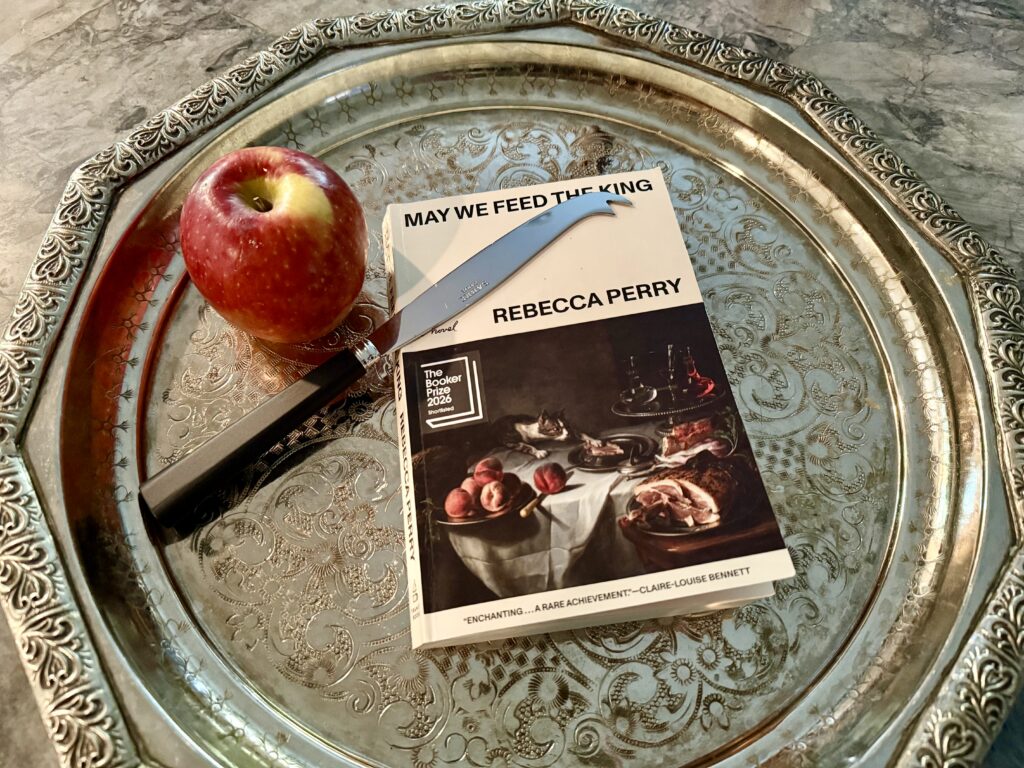
Each short chapter titled as a poem. Each paragraph detailed, secretive. The satisfaction of eavesdropping, of spying through cracks in a door or from a small window, of viewing what can’t be seen; at the same time, frustration that history is never conclusive. The precision and delicacy of facsimile, the limits of imagination. The passion of exactitude. The satisfaction of being born to your work; the pain of being forced into a role you cannot abide. The lifting of pervasive, unexplained grief. Connection between the curator of an exhibit and the reluctant King at its center. Court intrigue and institutional pressure. Glimpses, ghosts, snatches of conversation, ears to the door, gossip, written records, receipts. A broken heart nourished. A scandal refracted and a life reframed. An apple—not a “real” apple—placed with intention, mostly hidden. An abandoned needle dangles from embroidery. Ambiguity reigns.
The unnamed curator in English poet Rebecca Perry’s brilliant, original first novel, May We Feed the King, has a rule when creating scenes such as the ones she’s recently been commissioned to install in a former palace: “It must appear as if the person or people have just left the room. The viewer must feel as if the air is alive with their energy, that they only just missed them, that they will be back at any moment…” Perry infuses the speculative story of May We Feed the King with the same energy: the curator researches, inhabits, and creates with such sensitivity that the passive, miserable King himself comes alive in the restrictive world of the palace. As both resist their new roles (he as king, she as bereft survivor), Perry examines what we can and can’t know, how we should and shouldn’t live, what is preserved and what must remain forever unknowable. As gardens revive the King, a growing connection blooms between the curator and an archivist, and both curator and King rediscover their appetites.
I love a wholly original book; I love a poet expanding into fiction. I love how May We Feed the King inhabits both an imagined historical world that interrogates the role of power and agency and a present that questions storytelling and truth. This surprising debut is worth reading twice.