Dolly Parton, Gloria Steinem, Wendell Berry. In recent weeks, my Facebook and Instagram feeds have been full of tributes, photographs, quotations. In a sense, those three belonged to all of us. We relished sharing memories and moments; we re-posted insights others shared. At a time when we are so divided, it is a relief to pull together to mourn a musician, a feminist, and a farmer poet. It has been a month of loss, and I have been thinking a great deal about public grief contrasted with private sorrow.
Losing someone who isn’t famous is a lonelier grief. In the grip of personal tragedy, it seems inconceivable that the seasons can melt, summer into fall, as they always do. The great world keeps spinning, immune to children mourning parents gone too soon. The passage of time feels like an affront.
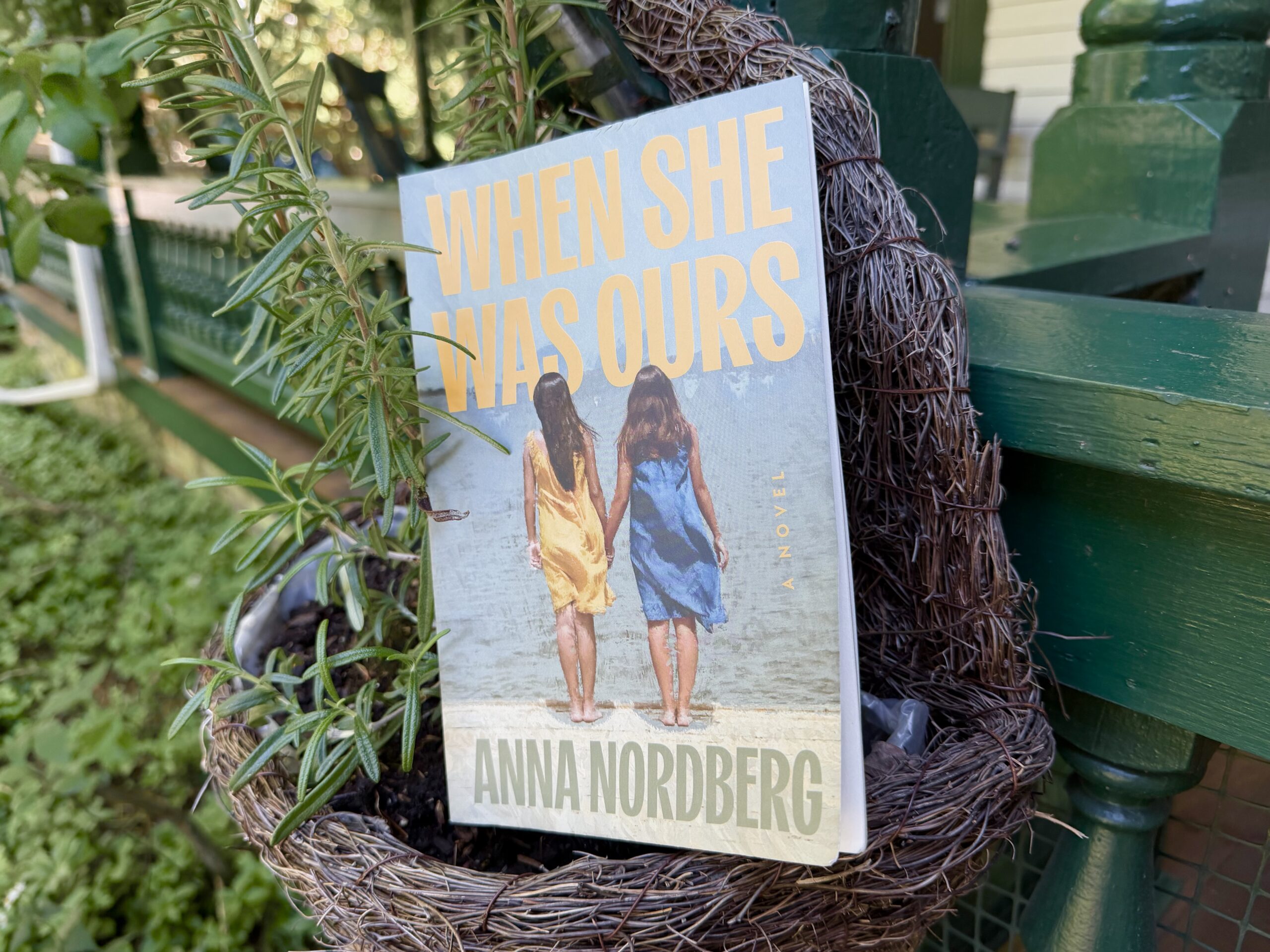
When She Was Ours is the first novel by Anna Nordberg, an accomplished journalist (and talented writer whom I taught when she was a high school student). Her exploration of the terrain of loss, borne of her own loss–but fiction, not memoir–is exquisite, layered with an archeologist’s precision.
I am drawn to stories about private grief because it is so often not discussed–it is as if, by speaking of it, we might catch it. In college, I remember weeping silently while watching Ordinary People and Harold and Maude. I knew those characters. My older brother died in an accident the summer between my ninth and tenth grade years, and no one knew how to talk about him or about terrible loss or about sadness that doesn’t subside quickly. In the aftermath of his death, I longed for a guide to reassure me that I would someday once again feel joy, cavort without care, love unreservedly. I didn’t need a guide to understand that I would always worry someone could be alive one day and dead the next; I knew that in my bones. As I’ve aged, I’ve wondered whether the opportunity to say goodbye to a loved one is better than the shock of sudden loss, but it’s a toss up: to watch a person you love suffer may be even worse than losing someone without warning.
In When She Was Ours, Nordberg invites us into a world where Phoebe and Astra grapple with losing their mother, Thea, an accomplished surgeon. Nordberg precisely delineates the world of the Upper East Side of Manhattan in the 1990’s and does the same with undergraduate life at Yale. Her use of sensory details and time stamps to evoke an era and a place is superb.
Even at Phoebe’s wedding, which is the centerpiece of the novel’s first third, everyone knows Thea is fighting cancer; the outlook is grim. We know she will die. What Nordberg does so well is to reveal the inner lives of Thea’s daughters, Phoebe the older sister and Astra several years younger. Astra is in college when Thea dies; her return to campus after her life changes irrevocably is drawn with a specificity I recognized: “Some people hugged her and told her how sorry they were. Others, who she knew but not very well, spotted her and then glanced away, their eyes sliding off her when she looked over. She realized perhaps she’d come back too early. Not for herself–work and the routines of class helped her–but for others. Amid the strange newness of her grief, she also held a sympathy for people who did not know what to say.”
In addition to mapping the inner world of grief, Nordberg knows that conflicts drive plot. There are lots of moments in the novel that made my breath catch, quite apart from Thea’s death. Without spoilers, I can say that Nordberg pays attention to pace. She holds back some truths, so that we discover information at the same time as the characters. While she knows how to offer a satisfying resolution, she also understands that grief never gets tied up in a neat bow. I was interested in the ways she invites us to consider blame and shame and vulnerability and the absoluteness with which we are tempted to assign responsibility.
Nordberg interrogates the relationship daughters have with their mothers and with each other. She knows how much a dying mother longs to protect her daughters, how a daughter longs to save her dying mother from even a moment of pain. She knows that sisters—even those who love each other—navigate complex history, both attracted and repelled, knit together through shared experiences. She understands the girls’ protection of their father, Tom, who is beautifully drawn—wise and kind, but never a caricature. And, Nordberg writes romantic relationships that feel real, articulating the bargains Astra makes with herself, allegedly to protect her heart.
She knows, too, how hungry those of us who grieve are for details we never knew about the person we mourn. Does knowing more help us? Sometimes, we think it might. A stranger from their mother’s past entices the girls with crumbs about Thea’s youth, and the girls fall into a trap. Ultimately, Astra draws on what she understands of her mother to escape this manipulative man:
“’You’re angry at me and Phoebe because we belong to her, and she belongs to us. Not to you. I know the mother of my heart, and you can’t touch her.’ It was the truth; Astra didn’t care. She trusted her mother, she trusted in the force of her mother’s love even when she was gone, and that took strength. Holding people at a distance–that was the opposite of strength.”
I loved this moment when she fully acknowledges the force and strength of a bond no one can shake. I am a fast reader, but I did not want this story to end; I did not want to leave these characters.
Grief is a long game; those of us who have lost someone know that grief is in the details–a scent that catches us unawares; a profile we momentarily mistake for the profile of the person we long to see; a song lyric that puts us back in time to the moment we were riding in a car with the person we loved. We are never “over” missing those we love. And yet we find ways to move forward, carrying memories we burnish over time.
Astra’s mother is a force. Anna Nordberg’s own mother was, too. I am awed by all I recognize in this story and all that has come from this deft storyteller’s extraordinary imagination.