


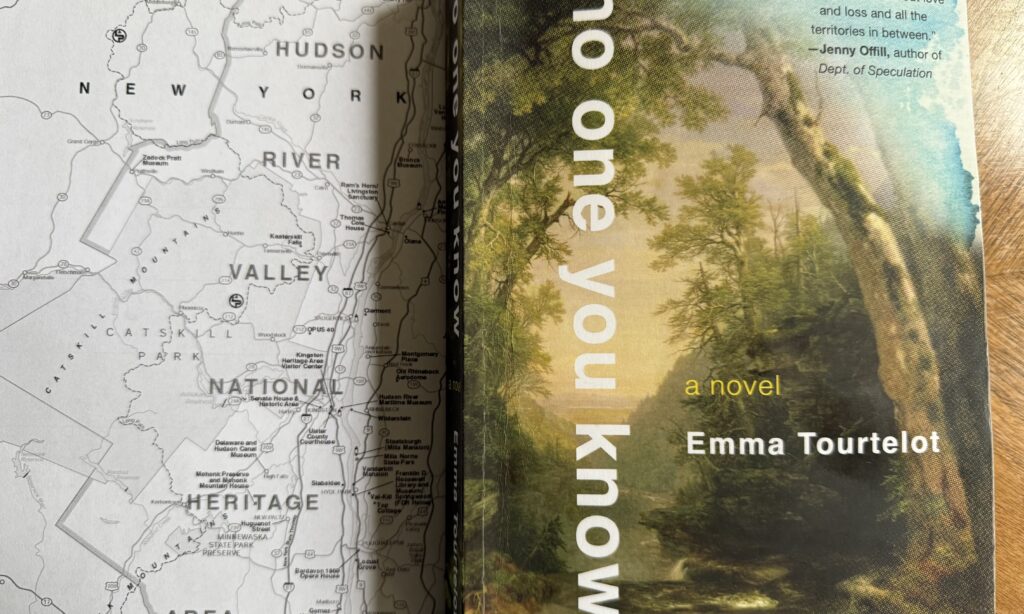
The patron saint of Emma Tourtelot’s debut novel, No One You Know, is the poet Maggie Smith, whose poem “Good Bones” captures the desperate dance of mothering: the futile but consuming need to protect children from the certain pain of living that co-exists with the idealistic delusion that our own mistakes would be redeemed if only we could “sell” our children on this “shithole” of a world. The metaphor of a realtor whose insistence that we recognize “good bones” becomes flesh in the character of Kate, whose Hudson Valley small-town, social-media-perfect life collapses under the stress of parenting her traumatized 14-year-old daughter, Indie. In her popular mom blog, Kate adopts the wry, humble-bragging tone of the “cidiot” she is, selling overpriced country homes to other transplants eager to frequent farmers markets, raise chickens named “Nugget,” and keep their children safe. Off-line, Kate’s loneliness threatens to swallow her. No One You Know encompasses the crisis point in Kate’s mid-life: her grief following the death of her difficult mother; the unraveling of her marriage; the friction of being an outsider in her chosen community; and most critical of all, the recent violent death of Indie’s best friend, Maddy, and Kate’s inability to connect with Indie or to fix the broken world.
Tourtelot alternates Kate’s chapters with ones narrated by Indie, the bright, shattered teenager whose sense of self and reality is dissolving as she faces life without Maddy. The dual narrative examines the aftermath of a tragedy that heightens the previous tensions between mother and daughter, husband and wife, the real and digital world, the more conservative “townies” and the liberal interlopers. Though empathetic, Tourtelot does not avoid examining the hypocrisy and privilege of characters who nonetheless evoke our sympathy and recognition.
No One You Know builds tension like a thriller, culminating in a riveting search for one of the characters. Tourtelot is equally effective at portraying the familiar daily compromises and annoyances within a loving, fraying family as she is at laying bare how inexplicable loss can break hearts and forge bonds. Despite its grim subject matter, No One You Know zings with Kate’s witty self-deprecation and admirable desire to, as the poet says, “make this place beautiful.” And Indie is a believable teenager, obsessed by both the mystery of consciousness and the cute new boy. The book is a propulsive read that is, at its heart, the story of a mother and daughter desperate to find their way back to each other.